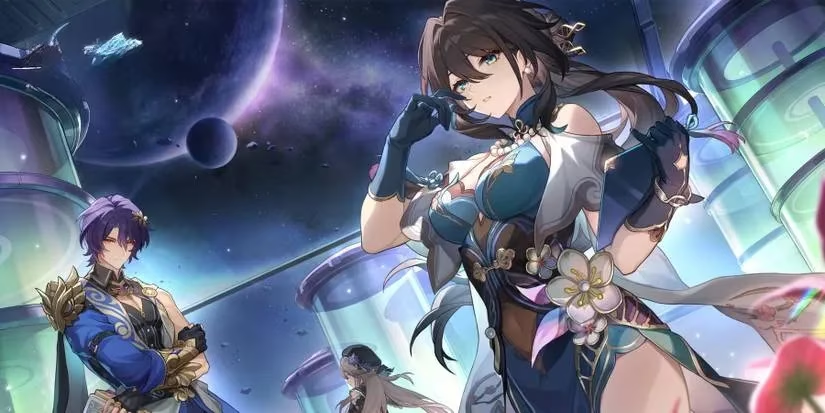
My 2026 Reflection on Ruan Mei vs. Dr. Ratio in Honkai: Star Rail
I still remember the night Version 1.6 of Honkai: Star Rail landed. At the time, I was a relatively ordinary player with a modest roster and a slowly growing stash of Stellar Jade. Then the livestream announced something that felt like a surprise snow day in the middle of a school week: Dr. Ratio would be given to every player for free as an award celebration, no Jade required. I had been saving for a new five-star, and suddenly the comfortable plan of just pulling the DPS cracked open like a frozen pond. Sitting next to that decision was Ruan Mei, a support unit whose toolkit felt like a Swiss watch made of ice—elegant, precise, and useful in almost every team. In 2026, I still think about that crossroad whenever a friend asks me how to plan a Honkai: Star Rail account.
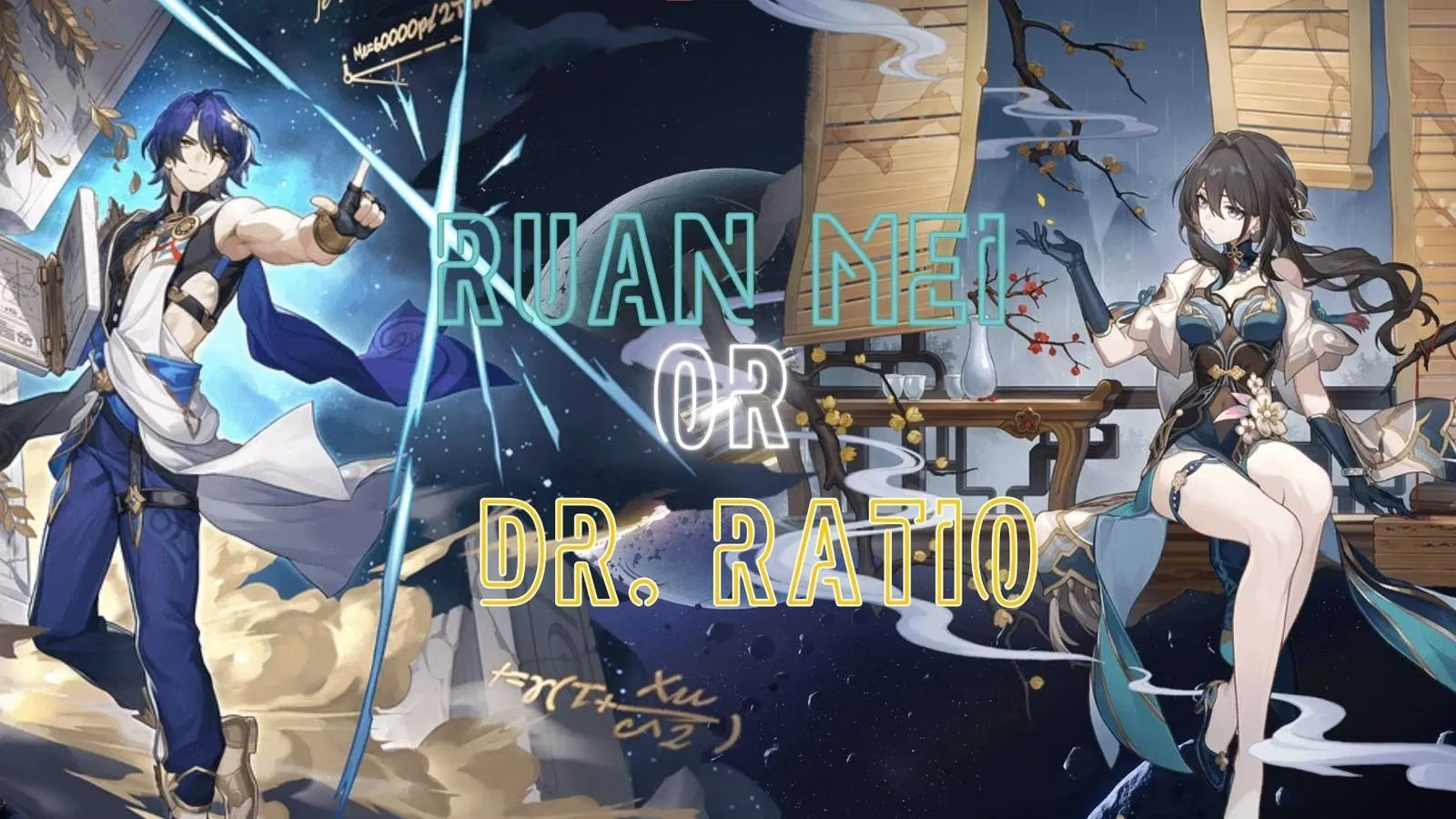
Ruan Mei joined the roster as the first limited Ice Harmony character. Her value arrived not through flashy personal damage but through making everyone else hit harder. Her buffs centered on Weakness Break efficiency, team damage, speed, and Effect RES Pen. Her Skill, Ultimate, and even her Talent layered duration buffs that lasted three turns, so she stayed skill point-positive. Later, I learned to think of Ruan Mei's Weakness Break efficiency buff like a locksmith handing out skeleton keys to the whole team; enemies stopped looking like walls and started looking like doors waiting to be opened. That kind of utility aged gracefully, and it is still a quiet anchor for many teams.
Dr. Ratio, by contrast, was an Imaginary Hunt character with a strict single-target focus. His damage came from his Skill, his Ultimate, and especially his follow-up attacks. Built into his kit, he could buff his own Crit Rate and Crit DMG based on the number of debuffs on the opponent, and he could apply some of those debuffs himself. His follow-up attacks felt like a metronome possessed by a caffeine-addicted ghost—impossibly precise, slightly manic, and always tapping exactly when I least expected it. I liked that rhythm, but I quickly realized he still needed proper supports around him, just like any DPS.
The free copy changed the math. Many of us no longer had to choose between owning Dr. Ratio or pulling Ruan Mei; we already had Dr. Ratio. The real question became whether to invest further into his Eidolons or Light Cone, or to spend those same resources on Ruan Mei. His first Eidolon enhanced his second Ascension trace, raising his maximum stacks for Crit Rate and Crit DMG. It could add another 10 percent Crit Rate and 20 percent Crit DMG, which sounded delicious. But here was the catch: getting those extra stacks required attacking a debuffed enemy, and hitting ten debuffs on one target was not easy in every team. He started battle with four stacks, which helped, but chasing his first Eidolon felt like trying to fill a ten-slot stamp card with only three stickers per visit—possible, but only with a very specific schedule. The second Eidolon added extra Imaginary DMG based on the number of debuffs, but the total resource cost made it feel like a luxury for most accounts.
Building them also went in opposite directions. Ruan Mei wanted Break Effect, Speed, and Energy Recharge to keep her Ultimate rotation smooth and reliable. HP percent or DEF percent filled the defensive slots, and Crit stats were practically unnecessary because her contribution came from Break Effect rather than raw personal damage. She could use a four-star Light Cone like a max-refined Memories of the Past and still feel complete. Relic sets such as Penacony, Land of Dreams could further boost Ice allies, adding flexibility.
Dr. Ratio wanted a traditional DPS diet: Crit Rate, Crit DMG, and ATK percent. Because follow-up attacks were a major part of his kit, sets like Inert Salsotto and the combination of Wastelander of Banditry Desert with The Ashblazing Grand Duke helped push his numbers. His build demands felt stricter than Ruan Mei's, as DPS units often require more min-maxing to shine. That did not make him bad—it just meant he asked for more patience.
For Light Cones, Dr. Ratio's signature Baptism of Pure Thought offered Crit DMG and follow-up attacks that ignored DEF, but it depended on debuffs to reach full value. The completely F2P five-star Light Cone Cruising in the Stellar Sea closed the gap so well that pulling the signature felt less like a need and more like a garnish. Ruan Mei, meanwhile, could thrive without a signature Light Cone, which only strengthened the case for saving.
By 2026, when I look back at my own Version 1.6 choice, the logic still holds. Because Dr. Ratio arrived free, pulling Ruan Mei made more sense for most players. She was versatile, added a rare offensive support role, and slotted into teams with Blade, Jingliu, Kafka, and Xueyi. She also rewarded players who wanted to lean into Weakness Break mechanics more often.
That said, investing further in Dr. Ratio was not wrong for everyone. He was a strong Imaginary DPS for players who never pulled Imbibitor Lunae. He rewarded follow-up attack and debuff-heavy playstyles, especially if you had Topaz or Kafka and did not need AoE coverage. And for anyone who did not want to spend resources building a brand-new character, refining the free Dr. Ratio felt like maximizing a gift rather than taking on a new project.
If I had to give my past self one line of advice, it would be this: pull for what makes your current roster breathe, not for what looks strongest on paper. Ruan Mei was the quiet engine that kept my teams moving. Dr. Ratio was the brilliant soloist who needed a well-tuned stage. Both were worth owning, but only one was worth chasing when the other came free.